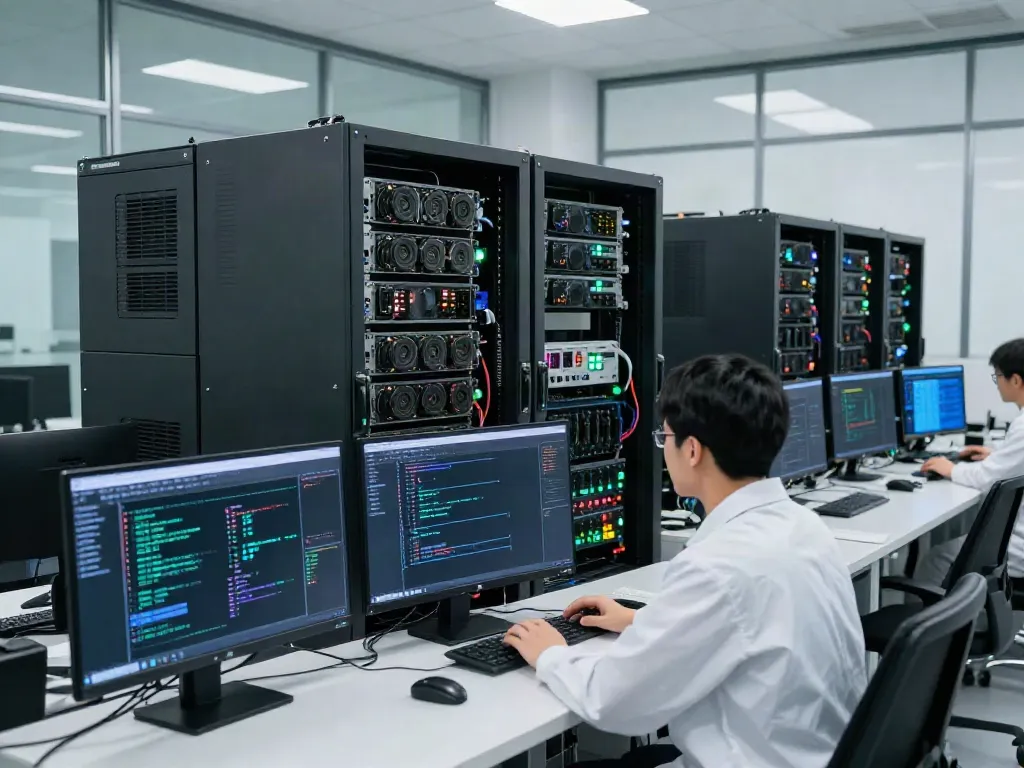
Understanding GPU Computing Basics
As the backbone of modern artificial intelligence (AI) applications, GPU computing plays a pivotal role in enhancing the processing capabilities required for deep learning and data analysis. Graphics Processing Units (GPUs), originally designed for rendering images, have evolved to handle computational tasks well beyond their initial purpose. Today, businesses and developers leverage GPU computing to address complex computations efficiently, making advancements in AI infrastructure accessible and practical.
What is GPU Computing?
GPU computing refers to the utilization of Graphics Processing Units for general-purpose processing. Unlike traditional CPUs, which are optimized for sequential processing, GPUs excel in parallel processing, making them ideal for tasks that require handling large volumes of data simultaneously. They can perform thousands of calculations at once, thereby significantly accelerating the processing of AI workloads.
Difference Between CPU and GPU
Understanding the fundamental differences between CPUs and GPUs is crucial in grasping the benefits of GPU computing. CPUs are designed to handle a limited number of tasks at high speed. In contrast, GPUs can manage thousands of threads concurrently, making them more suited to processing complex algorithms involved in training AI models.
- Speed: GPUs can process data faster than CPUs due to their parallel architecture.
- Throughput: The ability of GPUs to perform simultaneous calculations enhances throughput for large datasets.
- Architecture: GPUs consist of thousands of smaller cores designed for executing multiple operations simultaneously.
How GPU Computing Powers AI
GPU computing underpins the rapid advancements in AI by facilitating faster data processing, which is essential for training machine learning models. Machine learning tasks, such as neural network training and data analysis, require intensive computation and large amounts of data. By leveraging GPUs, organizations can reduce the training time of models from weeks to hours or even minutes. This acceleration enables more profound insights and faster deployment of AI solutions.
Benefits of GPU Computing in AI Applications
The integration of GPU computing in AI applications offers substantial advantages, empowering organizations to maximize their computational efficiency and innovation capabilities.
Increased Processing Speed
One of the most significant benefits of GPU computing is its ability to dramatically increase processing speed. Organizations harness this speed to run complex algorithms and calculations that would be impractical with traditional computing architectures. The rapid execution of tasks enables quicker iterations and enhancements, facilitating a speedier path from concept to production.
Enhanced Parallel Processing
The parallel processing capabilities of GPUs allow multiple calculations to be performed simultaneously. This is particularly beneficial in AI applications where vast datasets need to be processed. For instance, in image recognition tasks, a GPU can analyze thousands of pixels concurrently, enhancing accuracy and performance.
Cost Efficiency for Large-Scale Operations
Although the initial investment in GPU technology may be higher compared to traditional CPUs, the long-term savings can be substantial. The enhanced performance of GPUs can lead to reduced operational costs by minimizing the time required to complete compute-intensive tasks. Additionally, fewer GPUs can achieve the same results as a larger number of CPUs, lowering energy consumption and system maintenance costs.
Implementing GPU Computing in AI Infrastructure
Successfully leveraging GPU computing requires careful planning and implementation within an AI infrastructure. Proper selection of hardware and software, as well as the establishment of best practices, are essential components of an effective setup.
Choosing the Right GPU for Your Needs
When selecting a GPU for AI applications, it is crucial to consider several factors, including memory capacity, processing power, and compatibility with existing systems. High-performance GPUs with larger memory capacities can accommodate more complex models, allowing for better performance in demanding AI tasks.
Setting Up an Effective GPU Infrastructure
Building a robust GPU infrastructure involves evaluating hardware compatibility and ensuring that cooling and power supply systems can support high-density computing requirements. Scalable solutions allow organizations to expand their GPU resources as their AI workloads grow. Setting up a modular GPU infrastructure can help in accommodating future needs without extensive retrofitting.
Best Practices for Optimal Performance
To maximize the potential of GPU computing, organizations should follow best practices such as:
- Regularly updating GPU drivers and software to ensure optimal performance.
- Utilizing profiling tools to analyze workload performance and make necessary adjustments.
- Implementing cooling solutions to maintain optimal temperature levels during intensive computing tasks.
Challenges in GPU Computing for AI
Despite its many advantages, GPU computing comes with its own set of challenges that organizations must navigate.
Common Misconceptions about GPU Use
One prevalent misconception is that GPUs are solely for gaming and graphics rendering, which can lead to underutilization in AI contexts. Educating stakeholders on the capabilities of GPUs for machine learning and data processing is crucial to overcoming this barrier.
Managing Power and Cooling Requirements
High-density GPU computing can create challenges related to power consumption and heat generation. Organizations must invest in efficient cooling solutions and energy management strategies to prevent overheating and ensure uninterrupted operation.
Overcoming Technical Limitations
While GPUs are powerful, they also have limitations related to memory bandwidth and data transfer speeds. Organizations need to optimize data handling and computational strategies to mitigate these limitations and ensure efficient processing.
The Future of GPU Computing in AI
The prospects for GPU computing in AI are promising, with ongoing advancements and innovations set to shape the landscape in the coming years.
Emerging Trends for 2026 and Beyond
In the near future, we can expect to see several trends emerging in the field of GPU computing:
- Increased Integration of AI and GPUs: As AI applications become more prevalent, the integration of GPU computing will become seamless in various industries.
- Advancements in Hardware: New GPU architectures will offer improved performance, power efficiency, and specialized features for AI workloads.
- Cloud-Based GPU Solutions: The shift towards cloud computing will make GPU resources more accessible, allowing organizations to scale their infrastructure quickly without incurring significant upfront costs.
The Role of AI Tokens in GPU Computing
AI tokens will increasingly play a significant role in the utilization of GPU computing for AI workloads. They serve as a measurement unit for the operations performed by AI models, creating a value exchange in the AI Token Economy. By correlating GPU power with token earnings, businesses can optimize their operations and achieve better economic outcomes.
Predictions for Advancements in AI Infrastructure
The advancements in AI infrastructure, fueled by GPU computing, will focus on enhancing efficiency, scalability, and accessibility. Innovations in hardware, software, and data management will streamline operations, enabling organizations to leverage AI capabilities comprehensively.
How do AI Tokens Impact Power Contribution?
AI tokens directly influence the measurement of computing power and electricity consumption in AI infrastructures. The more efficient the GPU computing, the greater the potential for AI tokens generation, which can translate into rewards for participants in the AI Token Economy.
Who Can Benefit from GPU Computing in AI?
Various stakeholders, including businesses, developers, and researchers, can benefit from GPU computing. Organizations looking to enhance their AI applications, researchers conducting complex simulations, and developers seeking faster model training times all stand to gain from implementing effective GPU solutions within their infrastructures.