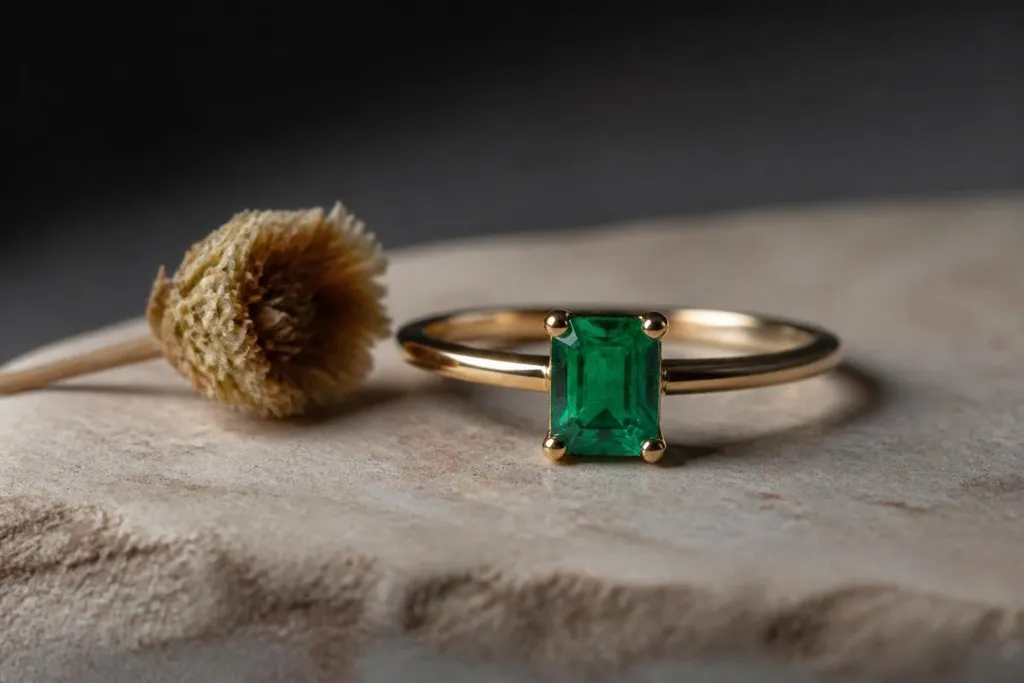
Few gemstones establish their identity as quickly as an emerald. Its green colour gives an engagement ring immediate presence, yet the effect can be surprisingly refined when the stone is paired with balanced proportions and a thoughtfully chosen setting. Rather than relying on intense sparkle alone, emeralds draw attention through depth of colour and the way light moves within the stone.
For couples considering timeless lab grown emerald engagement rings, the attraction extends beyond choosing an alternative to a colourless diamond. Lab-grown emeralds offer the characteristic chemistry and crystal structure of emeralds created under controlled conditions, allowing the gemstone's distinctive green to become the centre of a classic or contemporary engagement design. Cut, setting and everyday practicality all deserve careful consideration.
Why Emerald Green Has Lasting Appeal
Emerald occupies a distinctive position in fine jewellery because its colour can feel both dramatic and established. Green has been associated with precious jewellery for centuries, so an emerald engagement ring can look unconventional beside a diamond while still carrying a strong sense of heritage.
Colour should be assessed for more than saturation alone. Tone influences the personality of the stone: a richer green can create a more dramatic centrepiece, while a brighter appearance may feel fresher and lighter on the hand. Lighting matters too. An emerald can present differently in daylight, warm indoor lighting and evening conditions. Viewing the colour across different environments provides a more realistic impression of how the ring will look in daily life.
Metal choice can further change that perception. The same green gemstone may appear crisp against a white metal and noticeably warmer against yellow gold.
Choose a Cut That Makes the Most of Colour
The emerald cut is an obvious partner for its namesake gemstone. Its rectangular outline, cropped corners and long step facets create broad areas through which the green colour can be appreciated. Rather than producing the rapid scintillation associated with brilliant-cut diamonds, this style creates a calmer, more architectural appearance.
Other shapes offer different interpretations. Oval emeralds introduce graceful curves and can provide generous finger coverage, while cushion shapes combine softer corners with a substantial central presence. A round stone can feel more traditional and symmetrical. Carat weight should not be considered independently of dimensions. Someone might choose a 2-carat lab-grown emerald because a larger surface allows the colour to play a stronger role in the overall ring. Another wearer may prefer a smaller emerald surrounded by diamonds, using contrast rather than scale to create impact. The ideal proportion is the one that allows the green centre stone to look deliberate rather than overwhelming.
Let the Setting Frame the Emerald
A solitaire gives an emerald maximum visual independence. With little competing detail, colour and shape become the defining features of the engagement ring.
Diamond accents create a more decorative composition. A halo of colourless stones can establish a bright boundary around the green centre, intensifying the visual contrast. Diamond-set shoulders extend that brightness along the band, while a three-stone setting can frame an emerald with complementary side stones.
Metal has an equally important role. Platinum and white gold offer a cool backdrop that can make the green appear particularly crisp. Yellow gold creates a richer contrast and can give the ring a more traditional fine-jewellery character. Rose gold provides an unusual, softer combination for someone seeking a less conventional palette.
The setting should also protect the gemstone appropriately, particularly around exposed corners or edges.
Understand Emeralds as Everyday Gemstones
Emeralds require more considered handling than diamonds. They measure around 7.5 to 8 on the Mohs hardness scale, but hardness is only one aspect of durability. Emeralds can be more vulnerable to knocks and fractures, so thoughtful wear is important.
Removing an emerald engagement ring before heavy manual work, exercise or activities where it could receive a sharp impact is sensible. Cleaning methods should also be appropriate for the particular gemstone and setting; harsh chemicals and unsuitable mechanical cleaning can create unnecessary risk.
Periodic professional inspection allows a jeweller to check the setting and ensure the stone remains secure. For an engagement ring worn regularly, these habits are a worthwhile part of ownership rather than an inconvenience.
Final Thought
Lab-grown emerald engagement rings demonstrate that classic appeal does not have to mean choosing a colourless centre stone. Emerald green has enough historical pedigree to feel established, while its strong colour gives modern designs an unmistakably individual character.
The most successful ring balances that colour with an appropriate cut, protective setting and complementary metal. Chosen thoughtfully and cared for properly, a lab-grown emerald can provide something rare in engagement jewellery: a ring that feels immediately distinctive without losing its sense of timelessness.